
Your wedding invitation is the first whisper of the extraordinary evening you’re planning. When you’re hosting a black tie celebration, every detail of your stationery must reflect the refined atmosphere guests will experience.
From the weight of the paper beneath their fingertips to the carefully chosen words that announce your union, these elements work together to convey unmistakable elegance.
You’ll discover how subtle choices create lasting impressions that begin the moment your invitation arrives.
Key Takeaways
- Include “Black Tie” prominently on invitations using formal wording like “honour of your presence” with dates and times spelled out completely.
- Choose luxurious paper stock (100-130 lb cotton) with elegant printing methods such as engraving, foil stamping, or letterpress for refinement.
- Select classic serif typography paired with script fonts and rich jewel tones or sophisticated monochromatic palettes for timeless elegance.
- Mail invitations three months in advance, ordering six months prior to accommodate production timelines for specialty printing and embellishments.
- Create a coordinated suite with RSVP cards, detail cards, and hand-calligraphed envelopes to provide comprehensive guidance while maintaining visual harmony.
Understanding Black Tie Dress Code and What It Means for Your Invitations

When you choose a black tie dress code for your wedding, you’re setting the tone for an evening of refined celebration—and your invitations must reflect that same level of sophistication. The black tie significance extends beyond formal attire; it signals an elevated experience where every detail matters, from champagne toasts to carefully curated centerpieces.
Your invitation becomes the first glimpse into this world you’re creating. Consider invitation styles that echo the evening’s elegance: engraved letterpress on heavy cotton paper, gilded edges that catch the light, or classic calligraphy flowing across pristine cardstock. These aren’t mere announcements—they’re promises of an unforgettable night.
The weight of your paper, the precision of your font choices, and even your envelope liners communicate the formality you expect. When guests receive your invitation, they’ll immediately understand they’re invited to something extraordinary, prompting them to dress accordingly and arrive ready for an evening of timeless romance.
Essential Wording and Etiquette for Formal Wedding Invitations

Because your black tie invitation sets expectations before guests even select their attire, every word must convey the formality and grace of your celebration.
Traditional invitation styles demand precision in language that honors your cherished guests while establishing the evening’s refined atmosphere.
Master these essential elements:
- Honor your hosts properly – Parents’ names appear first using formal phrasing examples: “Mr. and Mrs. Jonathan Alexander Bennett request the honour of your presence”
- Spell everything completely – Never abbreviate dates, times, or addresses; write “Saturday, the twentieth of June” instead of “Sat., June 20th”
- Choose “honour” over “honor” – The British spelling elevates formality and signals black tie expectations
- Include dress code explicitly – State “Black Tie” or “Black Tie Optional” on the invitation or reception card
Your wording creates intimacy through thoughtful formality, ensuring guests feel both welcomed and appropriately prepared for your sophisticated celebration.
Luxurious Paper Stock and Printing Methods That Convey Elegance

Your carefully chosen words deserve an equally distinguished canvas. The foundation of exceptional black tie invitations lies in selecting paper stock that speaks volumes before a single word is read. Luxury textures like 100% cotton paper create an immediate impression of refinement, while refined aesthetics emerge through thoughtful printing method selection.
| Printing Method | Visual Impact |
|---|---|
| Engraving | Creates raised text with subtle indentation on reverse side |
| Letterpress | Produces elegant debossed impressions into thick cardstock |
| Thermography | Delivers raised, glossy lettering with sophisticated dimension |
| Foil Stamping | Adds metallic shimmer in gold, silver, or rose gold |
| Embossing | Crafts textured, tactile designs without ink |
Consider heavyweight cardstock between 110-130 lb for substantial presence. Pair textured linen or laid finishes with crisp engraving for timeless elegance. Metallic accents through foil stamping elevate sophistication, while blind embossing adds understated luxury that guests will appreciate through touch alone.
Classic Design Elements That Signal a Black Tie Affair

Your invitation’s design vocabulary speaks volumes before guests read a single word.
The interplay of formal serif typography—think Garamond or Baskerville—against premium cotton or silk paper instantly establishes your event’s elevated tone.
When you pair these classical fonts with raised printing techniques like engraving or letterpress, you’re crafting a tactile experience that announces the sophistication your black tie affair demands.
Formal Typography and Fonts
Typography serves as the silent ambassador of your black tie wedding, conveying formality before guests even read a single word. Your choice of elegant typefaces establishes the sophisticated tone you’re creating for your intimate celebration.
Select fonts that embody formal aesthetics through refined letterforms and graceful proportions:
- Engraved script fonts like Copperplate or Bickham create timeless elegance with their flowing, handwritten quality.
- Classic serif typefaces such as Didot or Bodoni deliver crisp sophistication through dramatic contrast and clean lines.
- Traditional calligraphy styles bring romantic formality with their carefully crafted strokes and artistic flourishes.
- Monogram designs personalize your invitation while maintaining dignified presentation.
You’ll want to pair complementary fonts strategically—perhaps elegant script for names with refined serif for details—ensuring every element reinforces the elevated experience awaiting your cherished guests.
Luxurious Paper and Finishes
The substrate beneath those carefully selected typefaces carries equal weight in establishing your event’s prestigious character.
You’ll want to choose heavyweight cardstock—think 110-pound or higher—that speaks to quality the moment your guests lift it from their mailbox. Cotton fiber papers offer an unmistakable tactile richness that synthetic alternatives simply can’t replicate.
Consider luxurious textures like laid or linen finishes that catch the light beautifully. Elegant finishes such as engraving, letterpress, or foil stamping elevate your invitation from mere announcement to keepsake.
These techniques create dimensional interest and visual depth that photographs can’t fully capture.
Silk ribbons, wax seals, or vellum overlays add layers of sophistication. Each element you select should reinforce the formality you’re requesting, preparing your guests for the extraordinary celebration ahead.
Modern Takes on Traditional Black Tie Invitation Styles

While honoring centuries-old wedding traditions remains paramount, today’s black tie invitations successfully blend classical elements with contemporary design sensibilities.
You’ll discover modern elegance through minimalist typography paired with ornate borders, creating striking visual balance. Current invitation trends embrace unexpected color palettes—think midnight navy, deep burgundy, or charcoal paired with rose gold accents.
Consider these contemporary approaches:
- Geometric patterns intersecting with classic calligraphy for dimensional sophistication
- Acrylic or vellum overlays adding translucent layers to traditional cardstock foundations
- Asymmetrical layouts breaking conventional centered arrangements while maintaining refinement
- Mixed metallic foiling combining gold, silver, and copper for multidimensional shimmer
You’re not abandoning formality—you’re reimagining it.
These innovations respect black tie protocol while reflecting your personal aesthetic. Your guests will appreciate receiving an invitation that feels both timelessly elegant and invigoratingly current, setting expectations for an evening that honors tradition while celebrating your unique love story.
Color Palettes That Command Sophistication and Formality

How profoundly your invitation’s color scheme influences guest perception becomes evident the moment they lift the envelope. Your palette establishes formality before a single word is read.
Classic black and white delivers timeless authority—crisp ebony script against pristine cardstock creates elegant contrasts that never falter. Deep midnight navy paired with gold foiling whispers refined luxury, while charcoal gray with platinum accents offers contemporary sophistication without sacrificing gravitas.
Rich jewel tones command attention: emerald green, sapphire blue, or burgundy anchored by metallic accents convey opulence.
Sophisticated shades like champagne gold, ivory, and blush can work beautifully when balanced with darker elements—think rose gold calligraphy on deep plum backgrounds.
Monochromatic schemes in sophisticated shades project understated confidence.
Consider varying textures and finishes within your chosen palette: matte against shimmer, letterpress depth against smooth surfaces. These nuanced layers transform simple color choices into dimensional experiences that honor your black tie event’s significance.
Typography Choices That Elevate Your Invitation Suite

Your typography selections will set the immediate tone for your black tie celebration, signaling to guests the level of formality they can expect.
Classic serif fonts like Garamond, Baskerville, and Didot project timeless refinement and traditional elegance that aligns perfectly with formal dress codes.
Alternatively, you’ll find modern calligraphy scripts—featuring graceful flourishes and romantic letterforms—offer a sophisticated balance between contemporary style and ceremonial grandeur.
Classic Serif Font Options
The typography you select for your black tie wedding invitation establishes the tonal foundation before guests read a single word.
Classic typography styles communicate timeless sophistication through their refined letterforms and elegant proportions.
Consider these distinguished serif font pairings for your invitation suite:
- Didot paired with Futura creates striking contrast between high-fashion drama and clean modernity
- Garamond with Bodoni delivers old-world charm while maintaining contemporary readability
- Baskerville combined with Caslon offers traditional British elegance perfect for formal celebrations
- Bembo alongside Optima balances Renaissance grace with architectural precision
Your chosen typefaces should complement each other while maintaining distinct roles—one commanding attention for names and headlines, the other providing clarity for details.
This hierarchical approach guarantees your invitation feels both intimate and impeccably refined.
Modern Calligraphy Script Styles
While serif fonts anchor your invitation with classical authority, modern calligraphy scripts infuse warmth and romantic movement into your black tie wedding suite.
You’ll discover that contemporary modern calligraphy techniques balance flourish with restraint—creating sophisticated letterforms that feel both timeless and fresh.
Current calligraphy design trends favor graceful strokes with intentional spacing, allowing each character to breathe.
Consider pairing calligraphy with your guest names while maintaining structured typography for event details. This contrast creates visual hierarchy that guides your recipients through essential information.
Choose scripts with consistent weight distribution and elegant ascenders that won’t overwhelm your layout.
The right calligraphy whispers luxury rather than shouts it, complementing your formal dress code while adding an intimate, handcrafted quality that distinguishes your invitation from conventional formal suites.
Envelope Addressing and Presentation Standards for Formal Events

When addressing envelopes for black tie affairs, proper etiquette transforms each invitation into a preview of the evening’s refinement.
Your choice of envelope styles sets the foundation—opt for luxurious cotton paper with inner linings in silk or metallic finishes. The outer envelope demands flawless addressing etiquette: write full names and titles in elegant calligraphy, never abbreviations.
Essential presentation standards include:
- Hand-calligraphed addresses using traditional titles (Mr. and Mrs., Dr., The Honorable) in black or coordinating metallic ink
- Double envelopes with outer for postal handling and pristine inner for ceremony presentation
- Return addresses positioned on back flap, printed or blind-embossed for subtle sophistication
- Wax seals in your wedding colors or monogram, adding tactile luxury and old-world romance
You’ll want each guest to feel the weight of your invitation in their hands—a tangible promise of the extraordinary evening ahead.
This attention to detail creates anticipation before they’ve even read your names.
Including Essential Details: Attire, Timing, and Reception Information

Black tie designation appears prominently on your invitation’s lower right corner, yet it’s merely the beginning of guidance your guests require. Your invitation design must elegantly communicate ceremony timing—specify the exact hour, as formal affairs demand punctuality.
Include precise location details for both ceremony and reception, ensuring guests navigate your celebration seamlessly. When reception and ceremony occupy different venues, present this information with crystalline clarity. Your wording should flow: “Reception to follow” for same-location events, or provide the complete address when venues differ.
Consider including accommodation recommendations for traveling guests—this thoughtful addition demonstrates your care for their comfort.
RSVP etiquette deserves equal attention. Establish a response deadline three weeks before your wedding date, providing multiple response methods: reply cards, dedicated phone lines, or wedding websites. Clear instructions eliminate confusion and help you finalize seating arrangements.
Coordinating Your Full Suite: RSVP Cards, Details Cards, and Enclosures

Your invitation suite extends beyond the main card—it’s a collection of coordinated pieces that guide your guests through every aspect of your celebration.
Each enclosure serves a distinct purpose: RSVP cards capture responses with elegant efficiency, details cards convey accommodation and transportation logistics, and layered envelopes create a revealing experience that mirrors your event’s formality.
The key lies in maintaining consistent typography, color palettes, and finishing touches across every element so your guests recognize the sophistication of your black tie affair from the moment they open the envelope.
Maintaining Visual Consistency Throughout
As you curate each element of your wedding stationery, the visual thread connecting your invitation to its accompanying pieces transforms a collection of cards into a cohesive statement of refinement.
Visual harmony emerges when you thoughtfully repeat signature elements—perhaps your monogram graces both the invitation and RSVP card, while your chosen typeface appears consistently throughout.
Design coherence extends beyond mere repetition:
- Maintain identical paper weights and textures across all enclosures
- Echo metallic accents from foil stamping or letterpress details on every piece
- Preserve your color palette’s proportions and intensity throughout the suite
- Align border treatments, spacing, and layout structures for seamless unity
Each coordinated detail reinforces your black-tie vision, creating an intimate experience that honors your guests from the moment they open the envelope.
Essential Information Per Card
Beyond the aesthetic harmony of your suite lies the practical matter of distributing information strategically across each card. Your invitation design should allocate details purposefully, ensuring guests aren’t overwhelmed while maintaining that coveted sophisticated presence.
| Card Type | Essential Information |
|---|---|
| Main Invitation | Names, date, time, venue, dress code |
| RSVP Card | Response deadline, meal selections, guest count line |
| Details Card | Accommodations, transportation, website, timeline |
| Reception Card | Evening venue if different, cocktail hour timing |
| Direction Card | Specific address, parking instructions, map reference |
Thoughtful card dimensions create visual hierarchy—your main invitation commands attention at standard size, while enclosures work beautifully at proportional scales. This layered approach respects your guests’ time, delivering information elegantly without cluttering your primary piece with logistical details.
Envelope Layering and Assembly
While the individual cards showcase impeccable design, the true artistry emerges when you orchestrate their presentation through strategic envelope layering. Your guests’ first tactile experience deserves meticulous attention to assembly techniques that reflect your celebration’s refinement.
Proper layering creates an unforgettable reveal:
- Position your invitation card face-up as the foundation, with reply cards nested atop.
- Layer tissue paper between cards to prevent ink transfer and add textural luxury.
- Arrange details cards and enclosures by size, largest to smallest.
- Secure everything with silk ribbon or vellum belly bands before inserting.
Consider double envelope types: an inner unlined envelope bearing guests’ names, nestled within an outer addressed envelope. This traditional approach protects your suite while signaling formality—exactly what your black-tie occasion demands.
Embellishments and Finishing Touches for Maximum Impact

When your black tie wedding invitation deserves to make an unforgettable first impression, the right embellishments transform elegant stationery into a treasured keepsake.
Consider wax seals in your wedding colors—they’re timeless embellishment techniques that add authentic sophistication. Hand-applied with your monogram or family crest, they create an intimate connection between you and your guests.
Silk ribbons in champagne, midnight navy, or classic ivory elevate your invitation suite instantly. Tie them in delicate bows or secure them with crystal brooches for dimensional elegance.
Metallic foil stamping in gold, rose gold, or silver catches light beautifully, perfect for names and monograms. Edge painting along invitation borders adds unexpected luxury that guests discover as they open each envelope.
For finishing ideas that truly captivate, layer vellum overlays with gold calligraphy or add mother-of-pearl shimmer to your cardstock.
These thoughtful details signal the extraordinary celebration ahead while honoring the formality your black tie event deserves.
Timeline for Ordering and Sending Black Tie Wedding Invitations

Because black tie invitations require custom printing and specialty embellishments, you’ll need to begin your stationery journey earlier than standard weddings.
Production timelines for letterpress, foil stamping, and hand-applied details can extend six to eight weeks before your invitations are ready to mail.
Consider these essential mailing deadlines:
- Nine months before: Order save-the-dates for destination black tie affairs
- Six months before: Place your formal invitation order to accommodate production timelines
- Three months before: Mail invitations to allow guests time for attire preparation and travel arrangements
- Six weeks before: Send your final guest count to your venue and caterer
Your guests need adequate time to arrange evening wear, coordinate childcare, and clear their calendars for your sophisticated celebration.
Rush orders compromise quality and limit your embellishment options. Start early to guarantee every detail reflects the refined elegance your black tie affair deserves.
Frequently Asked Questions
Can We Have a Black Tie Wedding During Daytime Hours?
Yes, you can absolutely host a black tie wedding during daytime hours. Your guests will embrace daytime elegance in their formal attire, creating an intimate, sophisticated atmosphere that’s perfectly refined for your luxurious celebration.
How Do We Handle Guests Who Don’t Own Formal Attire?
You’ll want to proactively address this through thoughtful guest communication. Include a discreet note offering guidance on alternative attire options or rental services, ensuring everyone feels comfortable participating in your elegantly appointed celebration without financial strain.
Should We Provide Black Tie Attire Rental Information to Guests?
Like a velvet ribbon guiding guests gracefully, you’ll want to discreetly include rental services information. Offering attire options shows thoughtful hospitality, ensuring everyone feels confident and elegant while celebrating your intimate occasion together.
What if Our Venue Doesn’t Match Traditional Black Tie Formality?
You’ll create sophistication through your dress code specifications and décor choices rather than venue alternatives. Black tie elevates any space—your invitation’s elegant wording transforms unconventional locations into intimate, refined celebrations worthy of formal attire.
Can Children Attend a Black Tie Wedding Event?
You’ll decide whether children attend—there’s no universal rule. If you’re welcoming them to your wedding reception, make certain parents understand appropriate children’s attire: miniature formalwear that mirrors your sophisticated elegance, creating an enchanting, cohesive celebration.
Final Thoughts
Your black tie invitation sets the stage for an unforgettable evening of refined celebration. Consider this: guests spend an average of 30 seconds with your invitation, yet it shapes their entire perception of your event. You’ve carefully curated every detail—from the weight of your paper to the precise wording—to convey sophistication. Now, as you seal each envelope, you’re not just sending information; you’re extending an elegant promise of the magnificent celebration that awaits.
Share On Pinterest!


Related Posts
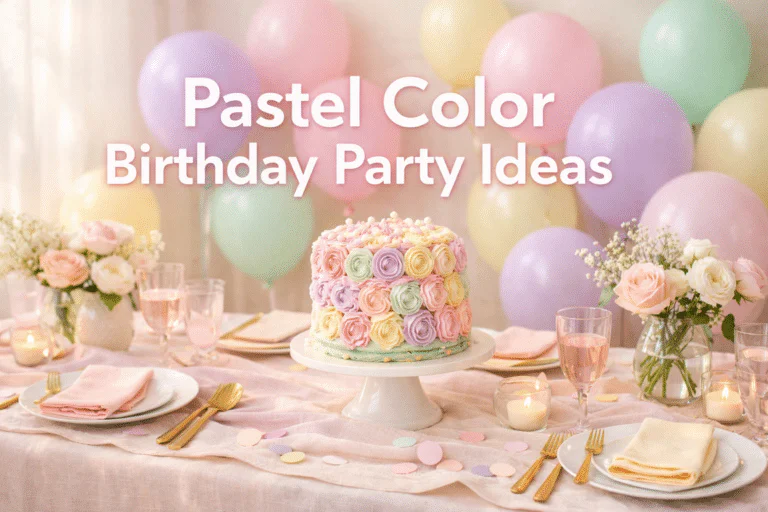
Pastel Color Birthday Party Ideas: 25+ Dreamy Ways to Celebrate in Soft, Stunning Style
Last updated: February 2026 Picture this: your guests walk through the door and immediately gasp. The room is bathed in soft lavender, blush pink, and the…
 Feb 16, 2026
10 Creative Paper Anniversary Ideas
Last updated: March 2026 Our curated paper anniversary ideas transform ordinary sheets into extraordinary declarations of love, but the tenth one will truly...
Mar 12, 2026
15 Gold Anniversary (50TH) Celebration Ideas
Last updated: March 2026 One golden milestone deserves an unforgettable celebration—discover creative ways to honor 50 years of love without breaking the bank.
Mar 12, 2026
How to Plan a Memorable First Anniversary
Last updated: March 2026 Kickstart your first anniversary celebration with creative planning tips that will transform this milestone into an unforgettable experience you'll always cherish.
Mar 12, 2026