
You’ll find magic in the smallest details when you weave nature into your wedding gown. Imagine delicate petals cascading down silk, vine-like lace wrapping your bodice, or preserved wildflowers caught forever in tulle. These aren’t just decorative touches—they’re whispers of enchanted forests and secret gardens, transforming you into something both earthly and otherworldly. The question isn’t whether nature belongs in your dress, but rather which elements will tell *your* story.
Key Takeaways
- Add floral embroidery, appliqués, or three-dimensional petals in blush, sage, and champagne tones on ivory tulle for romantic garden effects.
- Incorporate pressed or dried flowers sealed between organza layers or resin-coated to preserve cherished botanical memories within the gown.
- Use cascading vine details in emerald threads or raised embroidery flowing from shoulders to hem for dramatic woodland storytelling.
- Design petal-layered skirts with graduated lengths and asymmetrical edges using organza or silk chiffon for natural blooming rose effects.
- Integrate preserved moss, lichen textures, or leaf-shaped lace patterns to create authentic forest-floor aesthetics with dimensional depth.
Delicate Floral Embroidery and Appliqués


You can have short product description here. It can be added as and enable/disable toggle option from which user can have control on it.
Imagine this: tiny silk threads dancing across ivory tulle, creating gardens that bloom along your bodice and cascade down your skirt like wild roses climbing a summer trellis.
That’s the magic of floral embroidery and appliqués—they’ll transform your gown into a living canvas.
You’ll want three-dimensional petals that catch light as you move, perhaps delicate cherry blossoms clustered at your waist or intricate vines winding toward your hemline.
Choose botanical color palettes that whisper rather than shout: blush pinks, sage greens, champagne golds. These subtle hues complement your dress without overwhelming it.
Layer your embroidery strategically—dense florals at focal points, then scattered petals that fade like morning mist.
Pair this romantic detailing with nature themed accessories: a flower crown echoing your gown’s blooms, or pearl-and-leaf earrings.
The result? You’ll wear a garden that moves with you, breathing enchantment into every step down the aisle.
Cascading Vine Details Along the Train and Bodice

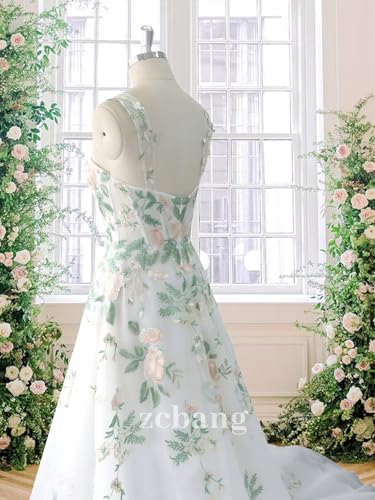
While individual blooms create moments of beauty, cascading vines tell a story that flows from your shoulders to the floor, like ivy claiming an ancient garden wall.
These vine motifs transform your silhouette into something wild yet refined, tracing deliberate paths across your bodice before tumbling down your train in elegant tendrils.
You’ll discover cascading greenery rendered in emerald threads, delicate beadwork, or raised embroidery that catches light as you move.
Some designers sculpt three-dimensional vines from silk organza, creating texture you can actually feel beneath your fingertips.
Others prefer subtle tonal embroidery that whispers rather than shouts.
Position your vines asymmetrically for dramatic effect—starting at one shoulder, winding across your waist, then sprawling across your train like morning glories seeking sunlight.
This continuous movement creates visual poetry, connecting each element of your gown into one enchanted narrative that celebrates nature’s untamed grace.
Leaf-Shaped Lace Patterns and Motifs


Lace transforms into a botanical garden when artisans cut and stitch leaf patterns into fabric, creating delicate ecosystems across your wedding gown.
You’ll discover maple leaves dancing along your neckline, fern fronds cascading down sleeves, and oak leaf motifs adorning your hemline. These intricate lace patterns breathe life into tulle and silk, transforming your dress into wearable poetry.
Choose ivy-inspired appliqués that spiral around your waist, or select delicate monstera leaf motifs that frame your décolletage.
You can layer different botanical lace patterns—mixing delicate maidenhair fern with bold tropical leaves creates dimensional texture that catches light as you move.
Your seamstress might suggest guipure lace featuring raised leaf designs, or Chantilly lace with whisper-thin botanical details.
Consider placing scattered leaf motifs asymmetrically across your skirt, letting them drift like autumn’s first fall.
Each carefully positioned leaf becomes part of your love story, connecting you to nature’s eternal romance.
Botanical-Inspired Beadwork and Crystal Arrangements


When artisans translate dewdrops into seed pearls and morning frost into crystals, your wedding dress becomes a canvas for nature’s precious moments.
Botanical beadwork captures the delicate architecture of petals and stamens through carefully placed embellishments. You’ll find tiny glass beads clustering like pollen grains along your neckline, while sequins shimmer like water droplets caught on spider silk.
Consider cascading crystal arrangements that mirror honeysuckle vines trailing down your bodice, or scattered Swarovski elements evoking starlight filtering through forest canopies.
The magic lies in strategic placement—concentrate your beading where light naturally falls, creating luminous focal points that catch every glance. Pearl clusters can form flower centers, while bugle beads become elegant stems and tendrils.
Choose aurora borealis finishes for crystals that refract rainbow hues, mimicking nature’s iridescence.
Each embellishment tells your story, transforming fabric into a living garden that moves with you, catching light and breath in equal measure.
Pressed Flower Preservation Techniques in Fabric

You’ll want to choose blooms at their peak—delicate forget-me-nots, petals from your grandmother’s garden roses, or wildflowers gathered from the meadow where he proposed.
The magic happens through careful pressing between parchment paper and heavy books, then allowing nature’s artwork to dry completely over two to four weeks.
Once your treasures are paper-thin and preserved, you can seal them beneath sheer organza or within resin-coated layers, transforming fleeting beauty into an eternal part of your gown.
Selecting Flowers for Preservation
Choosing the perfect blooms for your pressed flower gown requires understanding which petals will maintain their enchantment through preservation. Your flower selection should favor naturally flat varieties like pansies, cosmos, and delphiniums—they’ll press beautifully without losing their delicate charm.
Avoid thick, moisture-rich blooms such as roses or peonies, as they’ll brown during the drying process.
Consider gathering wildflowers from meaningful places: your grandmother’s garden, the meadow where you first kissed, or your favorite hiking trail. These personal touches weave your love story directly into the fabric.
Different preservation techniques work better with specific flowers—violas and forget-me-nots retain their vivid colors, while Queen Anne’s lace adds ethereal texture.
Harvest blooms in mid-morning after dew evaporates, ensuring they’re pristine for pressing.
Pressing and Drying Methods
Once you’ve gathered your precious petals, the magic of transformation begins. You’ll want to master pressing techniques that preserve each bloom’s delicate essence.
Place your flowers between parchment paper, nestling them within heavy books or specialized flower presses. The weight should feel substantial—like a gentle, constant embrace. Leave them undisturbed for two to three weeks in a dry, cool sanctuary.
For drying processes, consider silica gel crystals that cradle each petal while drawing moisture away, maintaining their dimensional beauty.
Hang delicate blooms upside down in bundles, letting gravity work its quiet alchemy. Air-drying suits heartier specimens—lavender, roses, baby’s breath—while pressed flowers become ethereal, translucent treasures perfect for encasing in resin or stitching between organza layers of your gown.
Sealing Flowers Into Fabric
When your pressed petals have surrendered their moisture and achieved that papery permanence, they’re ready for their most intimate transformation—becoming one with fabric itself.
You’ll want to explore flower sealing techniques that honor both fragility and permanence. Position your dried botanicals between sheer organza or tulle layers, then carefully stitch around their edges, creating delicate frames that capture light.
For more permanent floral preservation methods, consider resin-coating individual petals before attaching them to your gown’s bodice or train.
Another enchanting approach involves sandwiching flowers between silk and gossamer netting, then using invisible thread to secure them.
Each technique whispers its own story—choose the method that resonates with your vision of preserved beauty dancing across fabric.
Branch and Twig Structural Elements

When you’re ready to embrace nature’s architecture, branches and twigs transform from woodland findings into enchanting structural elements for your gown.
You’ll discover these organic pieces can create a corseted bodice framework that hugs your silhouette like forest vines, extend dramatically across shoulders as ethereal winged accents, or cascade along your hemline in a whisper of woodland magic.
Each placement option—whether reinforcing your bodice, adorning your sleeves, or dancing at your dress’s edge—brings the raw poetry of winter branches into your bridal design.
Bodice Framework Design Options
Three architectural approaches transform branches and twigs into the very bones of your bodice, each offering distinct silhouettes that range from ethereal to dramatic.
The first weaves slender willow branches through bustier styles, creating an organic cage that hugs your curves while allowing skin to peek between natural gaps.
Second, consider corset details where birch twigs replace traditional boning—each piece carefully stripped, shaped, and sealed to provide structure without sacrificing your comfort.
The third option embraces asymmetry: a single gnarled branch sweeps diagonally across your torso, its smaller offshoots spreading like capillaries beneath sheer fabric.
You’ll want branches harvested during winter dormancy—they’re strongest then, their moisture content lowest.
Each piece requires sanding until silk-smooth, then sealing with non-toxic finish to prevent splintering against your precious skin.
Sleeve and Shoulder Accents
While your bodice commands attention at center stage, shoulders and sleeves offer opportunities for nature’s drama to unfold in unexpected ways. Consider delicate branch appliqués cascading down cap sleeves, or twig-inspired illusion netting that makes floral lace appear suspended in air.
| Sleeve Style | Nature Integration |
|---|---|
| Off-shoulder | Vine embroidery tracing collarbone |
| Bishop sleeves | Pressed botanicals in sheer fabric |
| Flutter sleeves | Scattered petal appliqués |
| Long fitted | Branch-like beading patterns |
| Detachable cape | Woodland nature motifs throughout |
You’ll find that shoulder accents create movement—imagine leaf-shaped cutouts revealing skin, or gossamer sleeves embroidered with climbing ivy. These elements transform simple silhouettes into enchanted statements, letting nature’s artistry frame your face and emphasize your graceful movements throughout your celebration.
Hemline Branch Embellishments
The dress’s foundation becomes an artist’s canvas where twisted branches and delicate twigs trace organic patterns along your hemline, grounding ethereal fabric in earth’s raw beauty.
You’ll discover branch embellishment techniques that transform ordinary borders into woodland masterpieces—wire-wrapped stems wrapped in silk thread, laser-cut wooden appliqués, or hand-painted vine motifs that spiral upward like morning glory tendrils.
Nature inspired color palettes breathe life into these botanical details: bronze branches against champagne tulle, silver birch accents kissing ivory silk, or verdant moss-toned embroidery crawling across blush organza.
Position these elements asymmetrically for movement that catches light as you walk, creating shadows that dance across your train. Each branch tells your forest fairy tale, anchoring dreams to earth’s timeless beauty.
Moss and Lichen Texture Integration

Because moss carries centuries of folklore as nature’s velvet carpet, integrating its plush texture into wedding attire creates an enchanting bridge between forest floor and formal wear. You’ll find preserved moss arrangement techniques that maintain softness while ensuring longevity throughout your celebration.
Consider clustered moss accents along your bodice’s sweetheart neckline, where each verdant tuft catches light like tiny emerald cushions. Lichen embellishments offer delicate, sculptural contrast with their branching formations. You can apply them to shoulder straps or create organic gradients cascading down your skirt.
Work with preservation specialists who stabilize these materials using glycerin treatments, keeping textures touchable yet resilient. Layer different moss varieties—sheet moss for coverage, mood moss for dimensional depth—creating forests in miniature across your silhouette.
Pair them with silk organza or raw linen to emphasize their wild authenticity. Your gown becomes a living reflection of woodland romance, where ancient growth patterns dance alongside your every movement.
Feather Accents for Woodland Whimsy

When feathers drift earthward through cathedral branches, they carry whispers of forest birds and untamed skies—qualities you’ll want woven into your woodland wedding aesthetic.
Select feather types that echo your ceremony’s natural surroundings: pheasant plumes for earthy authenticity, peacock fronds for iridescent drama, or delicate guinea feathers speckled like forest shadows.
You’ll discover ostrich feathers create ethereal movement along your train, while smaller rooster hackles add textural depth to bodice details.
Consider feather colors that mirror twilight woodland moments—sage greens melting into cream, dusty blues reminiscent of morning mist, or bronze tones catching dappled sunlight.
Attach them to shoulder caps for wing-like silhouettes, nestle them within floral appliqués, or cascade them down your back like a bird taking flight.
Balance remains essential; you’re channeling woodland magic, not creating costume.
Let feathers accent rather than overwhelm, ensuring each plume serves your enchanted vision purposefully.
Natural Dye Methods for Earth-Toned Fabrics

Like ancient alchemists transforming elements into gold, you’ll transmute roots, bark, and blossoms into hues that capture earth’s most intimate palette.
Avocado pits whisper soft pinks into silk, while walnut husks confess deep chocolate browns to cotton’s willing embrace. You’ll discover madder root’s passionate rust, indigo’s twilight blues, and onion skins’ honeyed golds—each natural dye source holding secrets passed through generations of makers.
These eco friendly dyes require patience and ritual. You’ll simmer botanicals slowly, coaxing pigments from their fibrous homes, then immerse your fabric in steaming baths where color blooms like watercolor on wet paper.
Each dip deepens the bond between cloth and earth. Mordants—alum, iron, copper—act as matchmakers, ensuring pigment and fiber intertwine permanently.
The results aren’t uniform perfection; they’re wonderfully imperfect, bearing subtle variations that mass production can’t replicate. Your gown becomes a love letter written in nature’s own ink.
Organic Fabric Choices: Silk, Cotton, and Linen

Your fingertips will know the difference before your eyes do—organic fabrics possess an honesty that synthetic materials can’t counterfeit.
Silk whispers against your skin like morning dew on rose petals, its lustrous threads spun from nature’s own looms. When you choose peace silk, harvested after butterflies emerge, you’re honoring life itself.
Cotton breathes with you, its fibers cradling your body in clouds of softness—particularly when cultivated through sustainable sourcing practices that nurture the earth rather than deplete it.
Linen carries an heirloom quality, its slightly rumpled texture telling stories of flax fields swaying in summer winds. This noble fabric softens with each wear, becoming more intimately yours.
Each material accepts eco friendly dyes differently: silk drinks color deeply, cotton embraces it gently, linen holds it with quiet determination. Together, they form your enchanted canvas—fabrics that haven’t forgotten their origins in soil, sunshine, and rain.
Tree Bark and Wood Grain Print Inspirations

The ancient language of trees translates beautifully onto bridal fabric—each whorl and ring a meditation on time itself.
You’ll find bark texture rendered in delicate embroidery, raised beadwork mimicking centuries of growth across your bodice. Imagine silver thread tracing the rough elegance of oak, or champagne sequins capturing birch’s papery luminescence.
Wood grain patterns work their magic through strategic fabric manipulation. Your seamstress can create these organic lines using pintucks, appliqué, or hand-painted silk that flows like growth rings down your skirt.
Consider a subtle ombré effect—deep forest brown fading to ivory—that mirrors a tree’s journey from heartwood to sapwood.
These prints ground your ethereal look in something tangible and enduring. They’re perfect for woodland ceremonies where you’ll stand among your inspiration, your gown echoing the very trees witnessing your vows.
You’re not just wearing nature—you’re embodying its patient, powerful beauty.
Fresh or Dried Botanical Attachments

While printed textures capture nature’s essence, actual botanicals bring an immediate, breathing energy to your wedding dress. Fresh floral arrangements cascade down tulle skirts like garden vines discovering sunlight, while dried botanical accents offer timeless preservation of your cherished day.
Transform your gown with these botanical attachments:
- Delicate flower crowns that flow into shoulder appliqués, creating an ethereal connection between your hair and bodice with tiny rosebuds or baby’s breath.
- Pressed wildflower panels sealed beneath organza layers, capturing meadow memories forever against your skin.
- Floating petal pockets strategically placed at your waistline, releasing soft fragrance with each movement down the aisle.
- Trailing ivy accents woven through corset lacing or wrapped around cap sleeves, bringing woodland magic to structured silhouettes.
You’ll become a living garden, merging your love story with earth’s most romantic offerings. Each botanical element whispers secrets only nature knows.
Nature-Inspired Silhouettes: Petal Layers and Flowing Forms

You’ll discover enchantment in gowns that mirror nature’s most graceful forms—think cascading petal skirts that unfurl like a blooming rose with each step down the aisle.
These romantic silhouettes embrace organic asymmetry, where hemlines dip and flow like windswept meadow grasses or ocean waves kissing the shore.
Cascading Petal Skirt Design
Imagine soft organza or silk chiffon layers unfurling down your gown like rose petals caught in a gentle breeze. Your cascading petals can transform a traditional silhouette into something ethereal and alive, with each layer catching light as you move.
To achieve perfect skirt flow, consider these enchanting techniques:
- Graduated petal lengths – Start with shorter layers at your waist, extending progressively longer toward the hem for natural dimension.
- Hand-cut asymmetrical edges – Mimic nature’s imperfect beauty with irregularly shaped petal hems.
- Wire-edged layers – Add subtle structure so petals lift and flutter with each step.
- Ombré dyeing – Blend colors from deep jewel tones to whisper-soft pastels, replicating sunset-kissed blooms.
You’ll create movement that’s both intentional and wonderfully unpredictable.
Organic Asymmetrical Hemlines
As nature never draws a straight line, your wedding gown shouldn’t either. Embrace the untamed beauty of asymmetrical layers that mirror windswept meadows and cascading waterfalls. Your hemline becomes poetry in motion—rising and falling like rolling hills beneath a summer sky.
Consider how morning mist clings unevenly to forest floors, then translate that ethereal quality into fabric that dips and swells organically. Asymmetrical layers create movement that’s utterly romantic, catching light and shadow as you glide down the aisle.
Incorporate organic textures through raw silk edges or hand-torn tulle that mimics lichen-covered bark. Let one side drift longer, grazing the ground like trailing ivy, while the other reveals your ankles with playful abandon.
This isn’t imperfection—it’s nature’s signature, perfectly imperfect and uniquely yours.
Frequently Asked Questions
How Much Does an Enchanted Nature-Themed Wedding Dress Typically Cost?
You’ll find enchanted nature-themed gowns ranging from $2,000 to $8,000 on average price. Designer brands like Rue de Seine and Galia Lahav create ethereal forest-inspired pieces that’ll make your woodland dreams dance into reality, darling.
Can Nature Elements in Wedding Dresses Survive Outdoor Ceremonies in Rain?
You’ll find preserved flowers wilt, fresh petals droop, and delicate leaves soften in rain. However, you can protect your gown’s magic by choosing waterproof materials like silk botanicals and resin-sealed elements, ensuring nature element durability throughout your dreamy, rain-kissed ceremony.
How Do I Preserve My Nature-Themed Wedding Dress After the Ceremony?
You’ll want professional dress preservation services that specialize in delicate nature embellishments. They’ll carefully clean your gown, protecting pressed flowers, leaves, and botanical details, then seal it in archival materials—preserving your woodland fairy tale forever, darling.
What Undergarments Work Best With Nature-Inspired Wedding Dress Silhouettes?
You’ll want seamless options that disappear beneath flowing fabrics—delicate bralette styles mirror nature’s gentle touch perfectly. Choose nude tones and wireless silhouettes that’ll let your ethereal gown cascade like morning dewdrops over petals.
Can Nature Elements Be Added to Existing Wedding Dresses Through Alterations?
You’ll absolutely transform your gown through skilled alteration techniques! Delicate vines, pressed flowers, or embroidered leaves can dance across your fabric choices—lace, silk, or tulle—creating an enchanted masterpiece that whispers your love story through nature’s timeless beauty.
Final Thoughts
You’ll step into your enchanted gown as if the forest itself has blessed you—petals kissing your skin, vines embracing your silhouette, and leaves dancing at your feet. Won’t you feel like nature’s most cherished creation? Every embroidered bloom, every whispered texture becomes part of your love story, transforming you into an ethereal woodland bride. You’re not just wearing a dress; you’re becoming the very essence of nature’s timeless romance.
Share On Pinterest!


Related Posts

DIY Centerpiece Ideas for an Anniversary Dinner Table
Last updated: March 2026 Stunning DIY centerpieces can transform your anniversary table into a romantic masterpiece, but one unexpected technique steals the show.
 Mar 13, 2026
25+ Stunning Outdoor Birthday Celebration Ideas for Nature Lovers
Last updated: February 2026 There's something almost magical about blowing out candles when the breeze carries the scent of pine and the sun is painting everything…
Feb 15, 2026
15 Unique Ways to Celebrate a 30TH Wedding Anniversary
Last updated: March 2026 Journey through 15 unforgettable ways to celebrate your pearl anniversary that will leave you wondering why you never thought of these before.
Mar 13, 2026
How to Throw an Anniversary Party at Home
Last updated: March 2026 Crafting the perfect anniversary party at home requires secrets that transform ordinary spaces into unforgettable celebrations—discover what most hosts overlook.
Mar 12, 2026