

The holiday season isn’t complete without the sweet aroma of freshly baked cookies filling your home.
A Christmas cookie exchange party combines the joy of baking with the excitement of sharing festive treats with friends and family. You’ll multiply your cookie collection while creating lasting memories during the most wonderful time of the year.
Planning a successful cookie exchange doesn’t have to be stressful. With the right preparation and a few simple guidelines you can host an event that’ll become an annual tradition.
Whether you’re organizing your first swap or you’re a seasoned host looking for fresh ideas this guide will help you create a memorable gathering.
From setting the perfect date to establishing swap rules and creating a festive atmosphere you’ll discover everything needed to ensure your cookie exchange runs smoothly.
Your guests will leave with boxes full of delicious varieties and hearts full of holiday cheer.
Setting the Date and Guest List

Selecting an optimal date and curating your guest list forms the foundation of a successful Christmas cookie exchange. These decisions directly impact attendance rates and the variety of cookies you’ll enjoy at your party.
Choosing the Perfect Time
Schedule your cookie exchange 2-3 weeks before Christmas Day for maximum attendance. Most hosts find success with dates between December 8-15 when guests have completed their holiday shopping but haven’t traveled yet. Weekend afternoons from 2-4 PM work best for families with children while evening events from 6-8 PM accommodate working professionals.
Consider these scheduling factors:
- Avoid competing events: Check local calendars for school concerts, church programs, and community festivities
- Account for baking time: Give guests 7-10 days’ notice to prepare their cookies
- Plan around holidays: Skip dates immediately before Thanksgiving or during Hanukkah celebrations
- Weather considerations: Select backup dates in regions prone to December snowstorms
Survey potential guests about their availability before finalizing your date. Create a quick poll using Google Forms or Facebook Events to identify conflicts and maximize participation.
Determining Guest Count and Sending Invitations
Calculate your ideal guest count by considering your home’s capacity and desired cookie variety. Most successful exchanges include 8-12 participants yielding 96-144 cookies per person. Smaller groups of 6-8 create intimate gatherings while larger parties of 15-20 generate extensive cookie collections.
| Guest Count | Cookies Per Person* | Total Varieties | Space Required |
|---|---|---|---|
| 6 guests | 72 cookies | 6 types | Living room |
| 10 guests | 120 cookies | 10 types | Open floor plan |
| 15 guests | 180 cookies | 15 types | Multiple rooms |
*Based on standard exchange rate of 1 dozen per participant
Send invitations 3-4 weeks before your event through digital platforms like Evite or Paperless Post. Include these essential details:
- Cookie requirements: Specify quantity (typically 6-12 dozen) and packaging expectations
- Allergen information: Request disclosure of nuts, gluten, or dairy ingredients
- Recipe cards: Ask guests to bring copies for sharing
- RSVP deadline: Set responses due 10 days before the party
- Parking instructions: Provide street parking details or nearby lot locations
Track RSVPs carefully and maintain a waitlist for last-minute cancellations. Send reminder messages 1 week before the exchange including final headcount and any updated instructions.
Establishing Cookie Exchange Rules

Clear guidelines ensure your Christmas cookie exchange runs smoothly and every participant enjoys the experience. You’ll create a fair and organized event by communicating specific requirements to your guests in advance.
Cookie Quantity Guidelines
Determine the exact number of cookies each participant brings based on your guest count. Request 6 cookies per person attending the exchange—if you’re hosting 10 guests, each person bakes 60 cookies total. This formula guarantees everyone leaves with the same variety they contributed.
Specify cookie portions in your invitation to avoid confusion. Ask participants to package cookies in half-dozen bundles for easy distribution. For example, 60 cookies become 10 packages of 6 cookies each.
Consider these quantity adjustments for different group sizes:
| Guest Count | Cookies Per Guest | Total Cookies Needed |
|---|---|---|
| 6-8 | 12 cookies each | 72-96 cookies |
| 9-12 | 6 cookies each | 54-72 cookies |
| 13-16 | 4 cookies each | 52-64 cookies |
Include 6-12 extra cookies for sampling during the party. These treats let guests taste different varieties before the exchange begins.
Packaging and Presentation Requirements
Set packaging standards that protect cookies during transport and display. Require food-safe containers like cellophane bags, treat boxes or mason jars for individual portions. These containers maintain freshness and prevent cookie breakage.
Request labels on each package listing the cookie name and baker’s name. Add allergen information including nuts, dairy, eggs or gluten to protect guests with dietary restrictions.
Suggest presentation ideas that enhance your cookie exchange display:
- Tie ribbons around cellophane bags in festive colors
- Attach gift tags with holiday designs
- Use clear containers to showcase cookie appearance
- Place cookies in decorative tins for reusable packaging
Provide a central display area where participants arrange their packaged cookies. Use tiered stands, holiday platters or decorated tables to create an appealing cookie showcase.
Recipe Card Requirements
Make recipe cards mandatory for your Christmas cookie exchange. Ask each participant to bring printed copies of their recipe—one for every guest plus extras for display.
Format requirements keep recipe cards consistent and useful:
- Include cookie name and baker’s name at the top
- List all ingredients with exact measurements
- Number baking steps in sequential order
- Note baking temperature and time
- Add yield information showing total cookies per batch
Create a recipe card template in your invitation materials. This template ensures guests provide complete information and maintains uniformity across all submissions.
Collect digital copies of recipes before the exchange date. Email submissions by December 10 allow you to compile a recipe booklet for guests. Print these collections as take-home gifts or share them digitally after the party.
Set up a recipe display station at your cookie exchange. Place cards next to corresponding cookie packages so guests connect recipes with finished products. Include pens for guests to mark favorites or add personal notes about baking experiences.
Creating a Cookie Sign-Up System
A well-organized sign-up system prevents duplicate cookies and ensures variety at your Christmas cookie exchange. Digital tools streamline coordination while accommodating everyone’s dietary needs and preferences.
Avoiding Duplicate Recipes
Set up an online spreadsheet through Google Sheets or Microsoft Excel to track cookie selections in real-time. Share the document link with participants 2 weeks before your exchange date and require sign-ups within 7 days of receiving the invitation.
Create three columns in your spreadsheet: participant name, cookie type, and confirmation status. Add a fourth column for backup options if the first choice becomes unavailable. Lock selections once confirmed to prevent last-minute changes that disrupt planning.
Establish category limits to maximize variety at your exchange. Allow only 2 chocolate chip variations, 2 sugar cookie types, and 3 bar cookies among your 12 participants. Reserve spots for traditional Christmas cookies like gingerbread, snickerdoodles, and shortbread.
Monitor sign-ups daily during the registration period. Contact participants who haven’t selected their cookies within 3 days of the deadline. Suggest specific cookie types to guests struggling with decisions based on gaps in your current lineup.
Accommodating Dietary Restrictions
Request dietary information on your initial invitation through a simple checkbox system. Include common restrictions: gluten-free, dairy-free, nut-free, egg-free, vegan, and sugar-free options. Create a separate field for other allergies or preferences.
Designate 25% of your cookie spots for special dietary categories when you have 3 or more guests with restrictions. Match bakers with dietary expertise to specific needs—assign gluten-free cookies to someone experienced with alternative flours.
| Dietary Category | Minimum Cookies | Popular Options |
|---|---|---|
| Gluten-Free | 2 dozen | Almond flour cookies, coconut macaroons |
| Dairy-Free | 2 dozen | Oatmeal cookies, meringues |
| Nut-Free | 3 dozen | Sugar cookies, chocolate crinkles |
| Vegan | 1 dozen | Gingerbread, fruit bars |
Color-code cookie packages according to dietary categories using ribbon or stickers. Place allergen-free cookies on a separate table with clear signage. Provide ingredient lists at the display station for guests to review before selecting cookies.
Create a master allergen chart displaying every cookie and its ingredients. Post this chart at your exchange entrance and near the cookie tables. Email a digital version to all participants 24 hours before the event for advance review.
Preparing Your Home for the Exchange
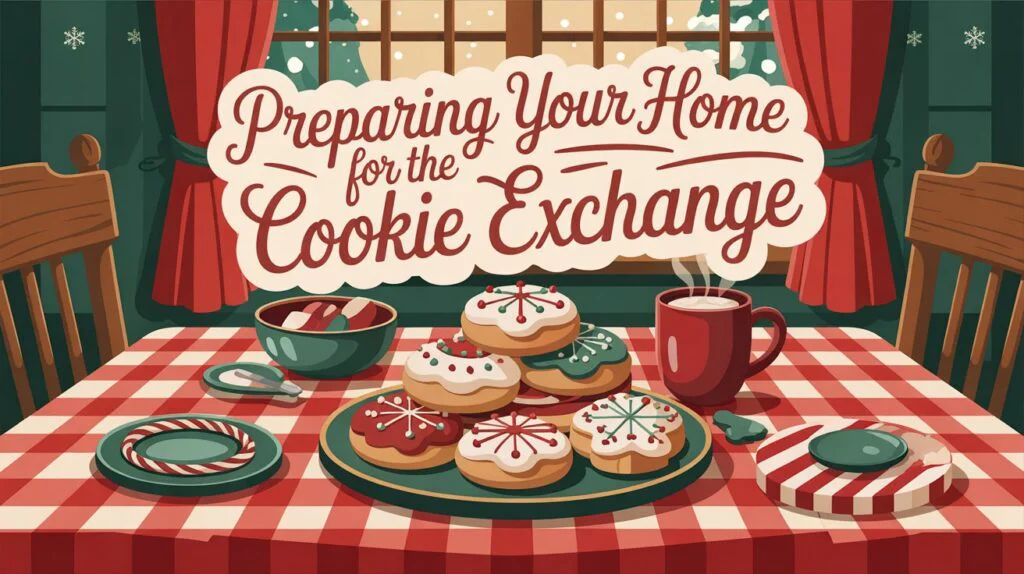
Transform your space into a festive cookie wonderland that facilitates smooth exchanges and creates memorable moments. Strategic preparation of your display areas and organization systems ensures guests can showcase their cookies beautifully while efficiently swapping treats.
Setting Up Display Tables
Create a central display area using 2-3 six-foot tables arranged in a U-shape or rectangle formation. Cover tables with festive tablecloths and add risers or tiered stands to maximize vertical space for 8-12 cookie varieties. Position the main display table in your largest room with at least 3 feet of clearance on all sides for guest circulation.
Label each display spot with tent cards showing the baker’s name and cookie type. Arrange cookies alphabetically or by category (chocolate, fruit, nuts, traditional) to help guests navigate selections quickly. Place serving utensils at each station using tongs or disposable gloves for hygienic handling.
Set up a secondary table for recipe cards and ingredient lists near the main display. Include pens and notepads for guests to jot down baking tips or special requests. Position dietary-restricted cookies on a separate table with clear signage indicating gluten-free, nut-free, or vegan options.
Add decorative elements between cookie stations using battery-operated string lights, miniature Christmas trees, or seasonal greenery. Install task lighting above display areas if your room lacks adequate overhead illumination.
Organizing Take-Home Containers
Stock 15-20 extra containers beyond your confirmed guest count to accommodate last-minute additions or replacements for damaged packaging. Purchase sturdy bakery boxes (9×9 inches minimum) or festive tins that hold 6-8 dozen cookies comfortably.
Create a packaging station near the exit with tissue paper, ribbons, and labels for guests to customize their take-home collections. Supply permanent markers in red, green, and gold for writing names on containers. Pre-cut 50 sheets of wax paper or parchment for separating cookie layers.
Arrange containers by size on a dedicated table with small bags for individual cookie portions and larger boxes for complete collections. Provide a scale at the packaging station if you’re dividing cookies by weight rather than count.
Set up a coat check area with numbered tags to free guests’ hands during the exchange. Position a rolling cart near the display tables for guests to temporarily store their selections before final packaging. Include 2-3 carrying bags or totes for guests who forget their own transport containers.
Planning Additional Activities and Refreshments

Your Christmas cookie exchange becomes more memorable when you incorporate engaging activities and serve delicious refreshments alongside the main event. These elements transform your gathering from a simple swap into a festive celebration that guests anticipate each year.
Holiday Games and Entertainment
Cookie-themed games add excitement to your exchange while guests mingle and sample treats. Schedule 2-3 activities throughout your event to maintain energy without overwhelming the cookie swap itself.
Cookie Voting Categories
Create voting ballots for fun awards that celebrate everyone’s baking efforts. Award categories include:
- Most Creative Design
- Best Traditional Cookie
- Most Festive Presentation
- Crowd Favorite Flavor
- Best Chocolate Cookie
Set up a voting station with pre-printed ballots and colored pens. Display winner certificates or small prizes like holiday ornaments or baking tools valued at $5-10.
Interactive Cookie Activities
| Activity | Duration | Supplies Needed | Guest Participation |
|---|---|---|---|
| Cookie Decorating Station | 20-30 minutes | Plain sugar cookies, icing, sprinkles | 6-8 guests at once |
| Holiday Cookie Trivia | 15 minutes | Printed questions, answer sheets | All guests simultaneously |
| Cookie Guessing Game | 10 minutes | Mystery ingredients list | Individual or teams |
| Recipe Story Sharing | 20 minutes | Microphone or designated area | 3-4 volunteers |
Background Entertainment Options
Play classic holiday music at 40-50% volume to maintain conversation flow. Create a 2-hour playlist featuring instrumental versions of popular carols mixed with upbeat holiday standards. Position a Bluetooth speaker in the corner opposite your display tables for even sound distribution.
Set up a photo booth area with holiday props and a cookie-themed backdrop. Provide instant cameras or designate a smartphone station where guests can capture memories with their cookie collections.
Serving Complementary Food and Drinks
Balance the sweetness of cookies with savory options and beverages that cleanse the palate. Plan your menu to serve 1.5 times your guest count to account for second helpings.
Savory Food Options
Offer 3-4 savory dishes that contrast with cookie sweetness:
- Cheese and crackers platters with 3-4 cheese varieties
- Vegetable crudités with herb dip
- Mini sandwiches or pinwheel wraps
- Warm spinach and artichoke dip with tortilla chips
- Meat and cheese skewers
Calculate 4-6 pieces per person for appetizers. Arrange savory items on a separate table from cookies to prevent flavor mixing.
Beverage Selection
| Beverage Type | Serving Size | Quantity for 12 Guests |
|---|---|---|
| Hot cocoa bar | 8 oz cups | 1.5 gallons |
| Coffee (regular/decaf) | 6 oz cups | 96 oz total |
| Spiced apple cider | 6 oz cups | 72 oz |
| Sparkling water | 12 oz bottles | 18 bottles |
| Milk (for cookies) | 4 oz glasses | 48 oz |
Hot Cocoa Bar Setup
Create a self-serve station with toppings in glass bowls:
- Marshmallows (mini and regular)
- Whipped cream
- Candy canes
- Chocolate chips
- Caramel sauce
- Cinnamon sticks
Label each topping and provide serving spoons. Keep cocoa warm in a 3-quart slow cooker set to low heat.
Timing Your Refreshment Service
Serve savory appetizers during the first 30 minutes as guests arrive. Transition to the cookie exchange activity after initial mingling. Offer beverages throughout the event and replenish the hot cocoa bar every 45 minutes.
Place napkins and small plates at both ends of your refreshment table. Stock 3 napkins and 2 plates per guest to accommodate multiple servings. Position a waste basket discretely near the refreshment area for easy cleanup.
Day-Of Exchange Logistics

The day of your Christmas cookie exchange requires smooth coordination to ensure every participant enjoys the festivities. Careful attention to display setup and swap management creates an organized event where guests can appreciate each cookie creation before taking home their delicious selections.
Cookie Display and Voting Setup
Arrange your cookie display 30 minutes before guests arrive to create an impressive visual presentation. Place cookies on tiered stands or decorative platters at varying heights to showcase each batch’s unique characteristics. Label each cookie variety with tent cards displaying the baker’s name and cookie type in festive fonts.
Position voting ballots and pens at the entrance of your display area. Create 5-7 voting categories such as “Best Decorated,” “Most Traditional,” and “Most Innovative Flavor” to engage participants throughout the event. Set up a ballot box decorated with holiday ribbon near the exit of your display zone.
Allocate one table spot per guest with their name clearly marked using place cards. Arrange cookies alphabetically by type or group them by flavor profiles like chocolate, fruit, or spice to help guests navigate selections efficiently. Install proper lighting above display tables using string lights or battery-operated spotlights to highlight cookie details and decorations.
Designate a separate judging table for contest entries if you’re hosting a competition. Supply scorecards with a 1-10 rating system for appearance, taste, and creativity. Post voting deadlines prominently and announce winners 15 minutes before the swap begins.
Managing the Swap Process
Execute your cookie swap using a number drawing system to determine selection order. Distribute numbered cards to guests upon arrival and call numbers sequentially for fairness. Allow each participant 60 seconds per turn to select their cookies while maintaining the flow of the exchange.
Guide participants through the swap using a clockwise rotation around your display tables. Limit initial selections to 2-3 varieties per round and conduct multiple rounds until all cookies are distributed. Monitor portions to ensure everyone receives an equal share based on your predetermined cookie-per-person ratio.
Provide take-home containers at a designated packaging station stocked with boxes, bags, and tissue paper. Station a volunteer at this area to assist with packaging and answer questions about specific cookies. Keep a master list of ingredients nearby for guests checking allergen information.
Carry out a “last call” system 10 minutes before the swap concludes. Ring a bell or make an announcement allowing guests to claim any remaining cookies on a first-come basis. Document the exchange with photos during peak swap moments while participants select their favorites.
Track cookie distribution using a simple checklist to ensure each guest receives their allotted amount. Address any discrepancies immediately by redistributing extras from your host reserve supply. Thank each participant as they complete their selections and remind them to collect recipe cards from the display area.
Conclusion
Your Christmas cookie exchange is now ready to become the highlight of the holiday season. With these planning strategies in place you’ll create an event that brings people together through the simple joy of sharing homemade treats.
The memories you’ll make go far beyond the cookies themselves. You’re building traditions that strengthen friendships and create lasting connections in your community. Each recipe shared becomes part of your group’s collective holiday story.
Don’t stress about perfection – the warmth and laughter filling your home matter more than flawless execution. Your guests will appreciate the effort you’ve put into organizing this special gathering and they’ll leave with full hearts and cookie boxes.
Start planning your cookie exchange today and watch it grow into an anticipated annual tradition. You’ll find that hosting becomes easier each year as you refine your process and your guests eagerly await their invitations. The sweet success of your first exchange will inspire you to make it even better next time.
Share On Pinterest!



Related Posts

Backyard 40th Birthday Party Ideas That Turn Your Yard Into the Hottest Venue in Town
Last updated: February 2026 Turning 40 is a big deal. It's that gorgeous intersection of wisdom, confidence, and finally knowing exactly what you want—so why celebrate…
 Feb 16, 2026
Corporate Christmas Party Ideas That'll Wow Your Team Without Wrecking Your Budget
Last updated: February 2026 Let me paint you a picture: It's December, your boss just dropped the "So, who's planning the holiday party this year?" bomb…
Feb 12, 2026
Second Birthday Party Ideas: 20+ Adorable Themes Your Toddler (and Your Budget) Will Love
Last updated: February 2026 Your baby isn't a baby anymore. 😭 I know—it hits different when you realize your little one is about to turn two.…
Feb 27, 2026
Birthday Party Catering Ideas That Turn Your Celebration Into the Event of the Year
Last updated: February 2026 Let me paint you a picture: It's your best friend's 30th birthday, and instead of the usual stack of pizza boxes and…
Feb 14, 2026